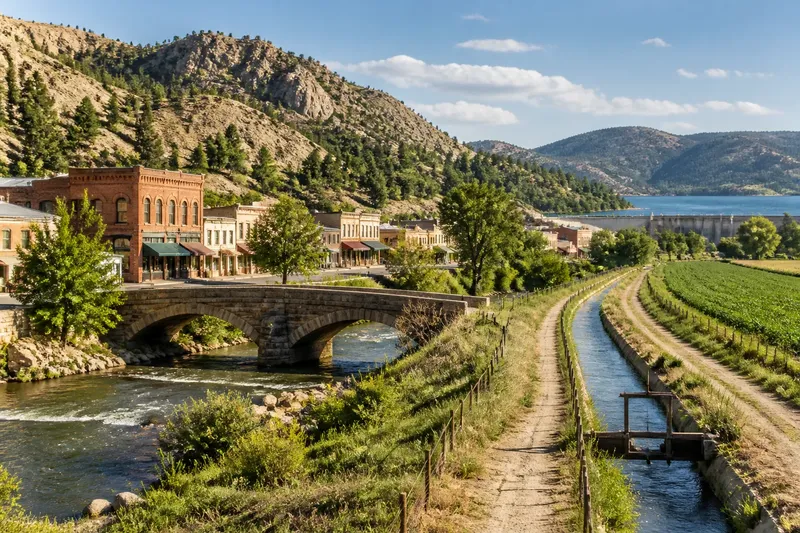
The Loop That Turns a Drive into a Journey
Plan a loop route through the West by matching roads to your time, access, and stops, so each leg has a clear purpose and the return is manageable.

A loop route through the West works best when each road has a clear purpose, not just a place on the map. Choose the connection that fits your available time, road conditions, and planned stops, then decide whether the return road is worth the added complexity.
A useful loop can connect a town, a public road across a range, and a second town or valley. Its shape matters less than whether you can travel it comfortably and verify the roads before you go.
Start with the route’s practical limits
Before choosing scenery, mark the points the route must connect: where you begin and end each day, where you plan to stay, and any place you need to reach at a particular time. This establishes the route’s practical limits before optional roads and stops complicate the plan.
Use a regional map to compare broad route options, then check a detailed road map or navigation app for junctions and road types. Confirm access, closures, and seasonal conditions with the responsible transportation agency or land manager. A route drawn on a screen is not proof that a road is open or suitable for your vehicle.
Then consider what the roads require of you. A narrow, winding road may call for more attention than an open highway; a remote stretch may have few services or limited phone coverage. If those demands conflict with your schedule or comfort, choose a simpler connection.
Give every road a practical role
For each leg, write down why it belongs: it connects two overnight stops, reaches a planned destination, provides a suitable alternative to a closed road, or makes the return manageable. This is more useful than assigning roads roles based only on how dramatic they look on a map.
Check whether a scenic road is public and appropriate for your vehicle and conditions. A route may be unpaved, seasonal, restricted, or unsuitable for the day’s weather. If you cannot confirm access, do not build the itinerary around that connection.
Keep the return decision open until you have considered the whole day. A different way back can be worthwhile if it connects safely to your starting point and fits your schedule. A direct return or out-and-back is often the clearer choice when the alternative relies on uncertain access or adds an uncomfortable stretch.
Compare route options with a concrete checklist
Use these checks to decide whether a proposed loop is workable. Each one links an observable detail to a next action, so you can revise the route before setting out.
- Check the start and end points for each day; if they do not match your lodging plan, then change the overnight stop or shorten the day, rather than assuming you can make up the time later.
- Check the road’s status with the responsible agency; if it is closed or access is unclear, then remove it from the plan and choose a confirmed public road.
- Check the road surface and vehicle restrictions; if the route is unsuitable for your vehicle, then select a paved or otherwise suitable alternative instead of relying on a navigation app’s suggested shortcut.
- Check whether the day includes a demanding road and a fixed arrival time; if both are present, then simplify the route or move the crossing to a day with more flexibility.
- Check where meals, fuel, and lodging are available along remote stretches; if services do not fit the day’s needs, then revise the stops or choose a route with more suitable access.
- Check the current weather and local road notices before departure; if conditions threaten access or comfort, then postpone the crossing or use a verified alternative.
- Check whether the return road actually reconnects with your planned endpoint; if it does not, then revise the route before departure rather than treating a nearby line on the map as a usable link.
Make the route fit the day you have
Road type and terrain affect how much attention a drive needs. Put the most demanding stretch at a point when you can approach it rested, and leave room for meals, fuel stops, and arrival at your overnight destination. In remote country, check current local information rather than assuming services or phone coverage will be available.
It is not worth adding a long detour just to make the route form a circle. If the extra road creates a difficult arrival, depends on uncertain access, or offers no practical reason to be there, take the direct route or make an out-and-back.
How should you decide between a loop and a direct return?
How can you tell if a loop is too ambitious?
Check the road types, terrain, service access, and fixed arrival commitments for the whole day. If the plan combines demanding roads with limited services or a tight arrival, simplify it or divide the drive where lodging and services are available.
Should the most demanding road come before or after a stop?
Choose a point in the day when you can give the road your attention and meet its conditions. If a stop would leave you rushed or tired before a difficult stretch, move the crossing or adjust the schedule.
Can you pass through the same town twice?
Yes, if doing so helps with lodging, services, or a confirmed connection. Check that the route still meets your schedule; the repeated town matters less than whether the roads serve a practical purpose.
What should you do when a connecting road is closed?
Follow current information from the responsible agency and reconsider the route as a whole. If the closure leaves no suitable confirmed connection, choose a different circuit or return the way you came.
Work through a route choice before committing
Say you plan to leave a desert-edge town, cross a wooded range on a public road, and return by a separate valley road. Your starting inputs are the overnight stop in town, the planned crossing, the return connection, and the current access notices. First, check that the crossing is open and suitable for your vehicle; if it is not, remove it and look for a confirmed alternative. Next, check that the valley road reconnects with town and that the day leaves time for your planned arrival. If both connections are confirmed and the schedule fits, the loop is a workable option; if the return road is uncertain or makes the day too demanding, take the direct route or stay overnight before continuing.
Before you set the itinerary, describe each road by its practical job and verify the details that could change the decision: access, surface, services, and endpoint. A loop route is worth choosing when those checks support it; if they do not, a simpler return is a sound plan.